
Anúncios
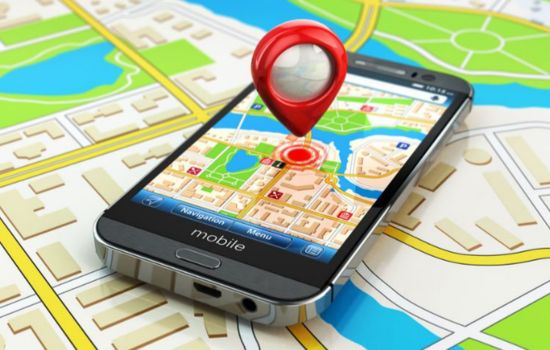
GPS applications have revolutionized how we navigate the world, transforming smartphones into powerful location-tracking devices that guide millions of users daily through unfamiliar roads and destinations.
Whether you’re commuting to work, exploring a new city, or embarking on a cross-country road trip, GPS applications have become indispensable tools in modern life. These digital navigation assistants offer far more than simple directions—they provide real-time traffic updates, alternative route suggestions, and points of interest along your journey.
Anúncios
The evolution of GPS technology has been remarkable. What once required expensive, dedicated hardware can now be accessed through a simple app download. Today’s GPS applications leverage satellite technology, cellular data, and crowd-sourced information to deliver incredibly accurate navigation experiences that adapt to changing road conditions in real time.
🌍 Understanding GPS Technology and How Navigation Apps Work
Global Positioning System technology relies on a network of satellites orbiting Earth, continuously transmitting signals that GPS receivers interpret to determine precise location coordinates. Modern smartphones contain sophisticated GPS chips that communicate with these satellites, enabling navigation apps to pinpoint your exact position with remarkable accuracy.
Anúncios
When you launch a GPS application, it immediately begins communicating with multiple satellites—typically four or more—to triangulate your location. This process, called trilateration, calculates your position based on the time it takes for signals to travel from each satellite to your device. The more satellites your phone connects with, the more accurate your location data becomes.
Beyond basic positioning, contemporary GPS applications integrate additional technologies like cellular tower triangulation, Wi-Fi positioning, and accelerometer data. This multi-source approach ensures navigation continues functioning even in challenging environments like urban canyons where satellite signals may be partially obstructed by tall buildings.


📱 The Core Features That Define Modern GPS Applications
Today’s navigation apps offer far more functionality than their predecessors. Turn-by-turn voice navigation guides drivers without requiring them to look at their screens, enhancing safety significantly. Many applications now include lane guidance, ensuring you’re positioned correctly for upcoming exits or turns on multi-lane highways.
Real-time traffic monitoring represents one of the most valuable features in modern GPS apps. By analyzing data from millions of users, these applications identify congestion, accidents, and road closures, automatically suggesting faster alternative routes. This crowd-sourced approach to traffic information has proven remarkably effective at reducing travel time.
Offline mapping capabilities have become increasingly important, especially for international travelers concerned about data roaming charges. Many GPS applications allow users to download regional maps in advance, enabling full navigation functionality without an active internet connection.
🚗 Popular GPS Applications and Their Unique Strengths
The GPS application market features several dominant players, each with distinctive characteristics that appeal to different user preferences. Waze has built a loyal following through its community-driven approach, where users actively report hazards, police presence, and traffic incidents. This real-time information sharing creates an interactive experience that extends beyond simple navigation.
Google Maps remains the most comprehensive mapping solution, offering detailed information about businesses, user reviews, operating hours, and even interior maps of shopping centers and airports. Its integration with other Google services makes it particularly powerful for Android users, though it functions excellently on iOS devices as well.
Apple Maps has significantly improved since its problematic launch, now offering clean aesthetics, privacy-focused features, and seamless integration with the Apple ecosystem. Its Look Around feature provides street-level imagery comparable to Google Street View in supported cities.
🎯 Specialized GPS Applications for Specific Activities
Beyond general navigation, specialized GPS applications serve niche audiences with particular needs. Hiking and outdoor enthusiasts benefit from apps like AllTrails and Gaia GPS, which provide topographic maps, trail information, and offline navigation capabilities essential for wilderness exploration.
Cycling-focused GPS applications like Komoot and Ride with GPS offer route planning optimized for bicycle travel, considering factors like road surface quality, elevation changes, and bike lane availability. These apps help cyclists avoid dangerous roads while discovering scenic routes tailored to their fitness level.
Fleet management and commercial drivers rely on specialized GPS solutions that consider vehicle dimensions, weight restrictions, and delivery optimization. These professional-grade applications help truckers avoid low bridges and restricted routes while planning efficient multi-stop itineraries.

⚡ Maximizing Battery Life While Using GPS Applications
GPS navigation is notoriously demanding on smartphone batteries, as it requires constant communication with satellites, active screen display, and often cellular data connectivity. Understanding how to optimize settings can significantly extend your device’s operational time during navigation.
Screen brightness represents one of the largest battery drains during GPS use. Reducing brightness to comfortable minimum levels or enabling auto-brightness can preserve substantial battery life without compromising usability. Many navigation apps also offer night mode, which uses darker colors that consume less power on OLED screens.
Closing unnecessary background applications before starting navigation prevents them from competing for processing resources and battery power. Location services for apps you’re not actively using should be set to “while using” rather than “always” to prevent constant GPS polling when navigation isn’t needed.
🔋 Hardware Solutions and Best Practices
Investing in a quality car charger ensures your device remains powered during extended navigation sessions. Fast-charging capable chargers can replenish battery faster than GPS apps deplete it, effectively eliminating battery concerns during driving.
Portable power banks provide essential backup power for pedestrian navigation, hiking, or situations where vehicle charging isn’t available. Modern high-capacity power banks can recharge smartphones multiple times, making them invaluable for extended outdoor adventures.
Temperature management matters significantly for battery performance. Mounting your phone away from direct sunlight and heat vents prevents overheating, which can reduce charging efficiency and potentially damage battery longevity over time.
🌐 Privacy Considerations When Using GPS Applications
Location tracking inherently involves sharing sensitive information about your movements, destinations, and daily routines. Different GPS applications handle this data with varying levels of transparency and user control, making privacy considerations increasingly important.
Most major GPS applications collect location history to improve service quality, provide personalized recommendations, and monetize through targeted advertising. Understanding each app’s privacy policy and adjusting settings accordingly helps users balance functionality with privacy protection.
Google Maps, for instance, stores detailed location history by default when signed into a Google account. Users can disable this feature, delete historical data, or set automatic deletion schedules through privacy settings. This data helps Google provide personalized commute predictions and location-based suggestions.
🔒 Protecting Your Location Data
Apple Maps emphasizes privacy by processing many navigation features on-device rather than transmitting raw location data to servers. Location information sent to Apple is anonymized and not connected to individual user accounts, representing a more privacy-conscious approach to navigation services.
For maximum privacy, offline GPS applications that don’t require constant server communication offer the most secure option. Apps like OsmAnd and MAPS.ME utilize OpenStreetMap data stored locally on your device, eliminating the need for cloud connectivity except during initial map downloads.
Regularly reviewing and managing app permissions ensures GPS applications only access the information they genuinely need. Disabling microphone access, contact access, and other unrelated permissions reduces potential privacy exposure without affecting core navigation functionality.
🎨 Customization Options That Enhance Navigation Experience
Modern GPS applications offer extensive customization features that allow users to tailor the navigation experience to personal preferences and specific use cases. Voice selection enables users to choose from various accent options, celebrity voices, or even record custom voice guidance in some applications.
Route preference settings let users prioritize different factors like fastest time, shortest distance, or most fuel-efficient path. Avoiding toll roads, highways, or ferries can be configured based on individual preferences or specific trip requirements.
Visual customization includes various map styles, from standard road views to satellite imagery, terrain visualization, or simplified navigation modes with minimal distractions. Some applications offer theme options that change color schemes based on time of day or user preference.
🚦 Advanced Features for Power Users
Multi-stop route planning enables efficient trip organization when visiting multiple destinations. This feature optimizes the sequence of stops to minimize total travel time, proving invaluable for delivery drivers, sales professionals, or anyone running multiple errands.
Speed limit warnings and camera alerts help drivers maintain legal speeds and avoid traffic violations. These features vary by region and application, with some countries restricting camera warning functionality due to legal considerations.
Integration with smart home devices and digital assistants allows hands-free navigation initiation. Asking Siri, Google Assistant, or Alexa to start navigation while preparing to leave makes departures smoother and safer by eliminating phone handling.
🌟 The Future of GPS Navigation Technology
Augmented reality navigation represents the next frontier in GPS applications, overlaying directional arrows and information directly onto camera views of the real world. Google Maps has pioneered this technology with Live View, which helps pedestrians orient themselves more intuitively in unfamiliar environments.
Artificial intelligence and machine learning continue improving route prediction accuracy by analyzing historical traffic patterns, weather conditions, and special events. These systems learn individual user preferences over time, automatically suggesting routes that align with personal priorities.
Electric vehicle integration addresses specific needs of EV drivers, including charging station locations, availability status, and route planning that accounts for battery range limitations. As electric vehicles become more prevalent, GPS applications are adapting to support this transition with specialized features.
🚀 Emerging Technologies Reshaping Navigation
5G connectivity will enable even more responsive real-time traffic updates and support bandwidth-intensive features like high-definition 3D mapping. Faster data transmission allows GPS applications to process and share information more rapidly, improving accuracy and user experience.
Vehicle-to-vehicle communication systems promise to revolutionize traffic management by enabling cars to share speed, position, and intention data directly with each other. GPS applications will integrate this information to provide unprecedented situational awareness and safety warnings.
Indoor positioning systems are gradually extending GPS functionality into buildings, shopping centers, and airports where satellite signals can’t penetrate. Using Wi-Fi, Bluetooth beacons, and other technologies, these systems help users navigate complex indoor environments with the same confidence as outdoor navigation.
💡 Practical Tips for Getting the Most from GPS Apps
Keeping your GPS application updated ensures access to the latest features, map data corrections, and performance improvements. Developers continuously refine routing algorithms and expand coverage areas, making regular updates essential for optimal functionality.
Downloading maps before traveling to areas with poor cellular coverage prevents navigation failures in remote locations. Most major GPS applications allow selective regional downloads, so you can prepare specifically for your destination without consuming excessive storage space.
Calibrating your phone’s compass improves directional accuracy, especially when starting navigation. Most applications prompt users to perform a figure-eight motion with their device, which helps the internal sensors establish accurate orientation.
📍 Optimizing Route Planning
Checking traffic conditions before departure allows you to time trips strategically, avoiding peak congestion periods when possible. Many GPS applications provide historical traffic data that helps predict optimal departure windows for regular commutes.
Saving frequent destinations as favorites streamlines navigation initiation and enables quick access to commonly visited locations. Home, work, and other regular stops can be reached with just a few taps rather than entering addresses repeatedly.
Exploring alternative transportation modes within GPS applications reveals options beyond driving. Many navigation apps now include public transit directions, bicycle routes, and pedestrian paths, offering comprehensive mobility solutions for various situations.
🎯 Choosing the Right GPS Application for Your Needs
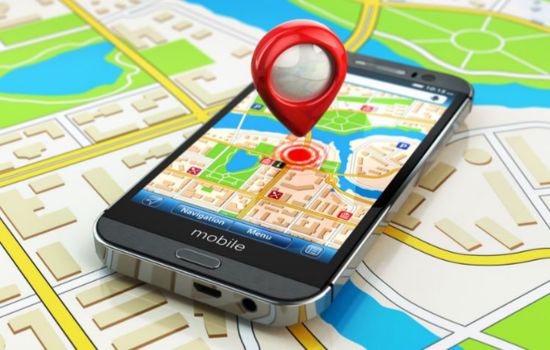
Selecting the ideal GPS application depends on individual priorities, device ecosystem, and specific use cases. Frequent drivers benefit most from apps with robust traffic data and automatic rerouting capabilities, while outdoor enthusiasts need offline maps and topographic information.
Privacy-conscious users should prioritize applications with transparent data policies and strong privacy controls. Evaluating how each app collects, stores, and shares location information helps make informed choices aligned with personal privacy values.
International travelers should consider apps with strong global coverage and offline functionality. Some GPS applications excel in certain regions while lacking detailed data elsewhere, making research about destination coverage worthwhile before trips.
The versatility and accessibility of modern GPS applications have fundamentally transformed how we interact with geographic space. From daily commutes to adventurous explorations, these powerful tools provide confidence, efficiency, and discovery opportunities that were unimaginable just a generation ago. As technology continues advancing, GPS applications will become even more intelligent, personalized, and integrated into our connected lives.
